


The Pride of Christ
What Jesus Carried to the Cross, And What the Broken Must Carry Back
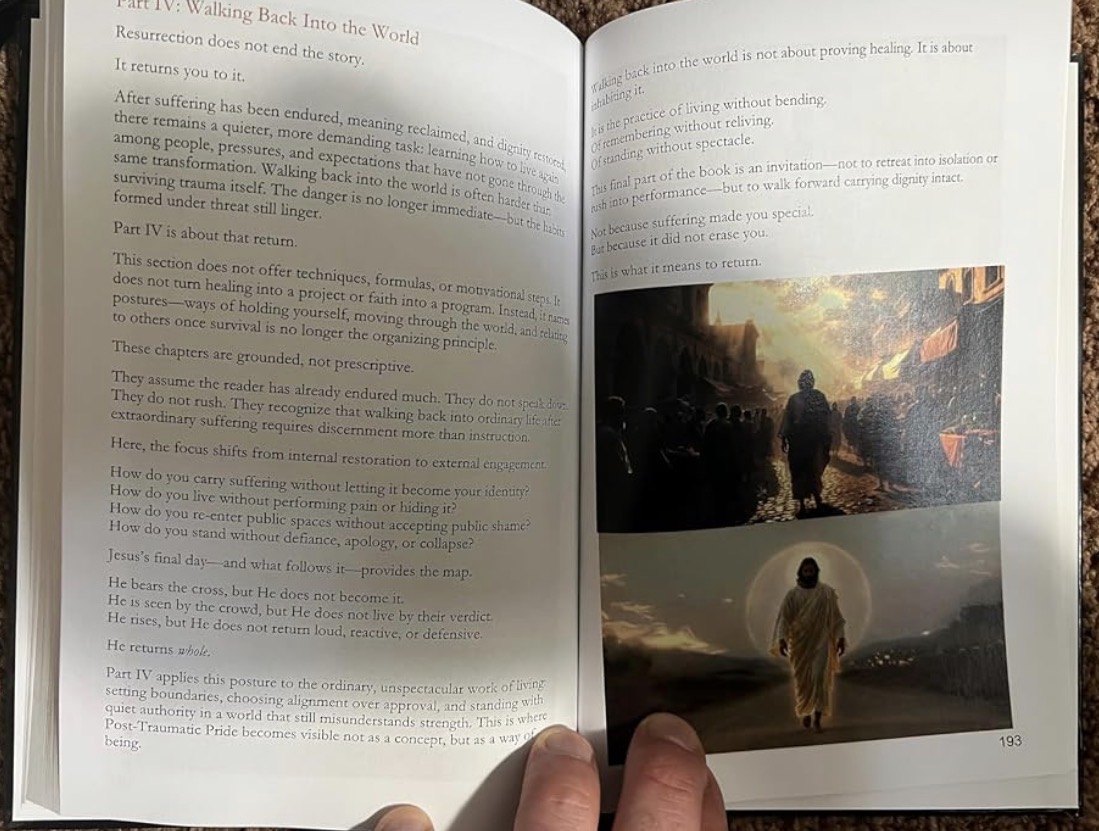
We tend to focus on the brutality of the crucifixion, and rightly so. But brutality alone does not explain what sustained Him. What carried Jesus through that day was not numbness, denial, or spiritual dissociation. It was alignment—between who He was, what He believed, and why He was willing to endure what He endured. That alignment produced something rarely named in Christian language: a form of pride that was pure, ordered, and obedient. Not pride in the self, but pride in the mission. Pride rooted in love, not ego. Pride that did not elevate Him above others, but enabled Him to remain whole while being torn apart.
Before the crowds formed, before the violence escalated, before the meaning of the day was sealed in public view, Jesus made a series of interior choices. These choices are easy to overlook because they are quiet. They leave no physical trace. Yet everything that follows depends on them. Without these moments of resolve, the cross would be reduced to brutality alone. With them, it becomes purpose lived all the way through.
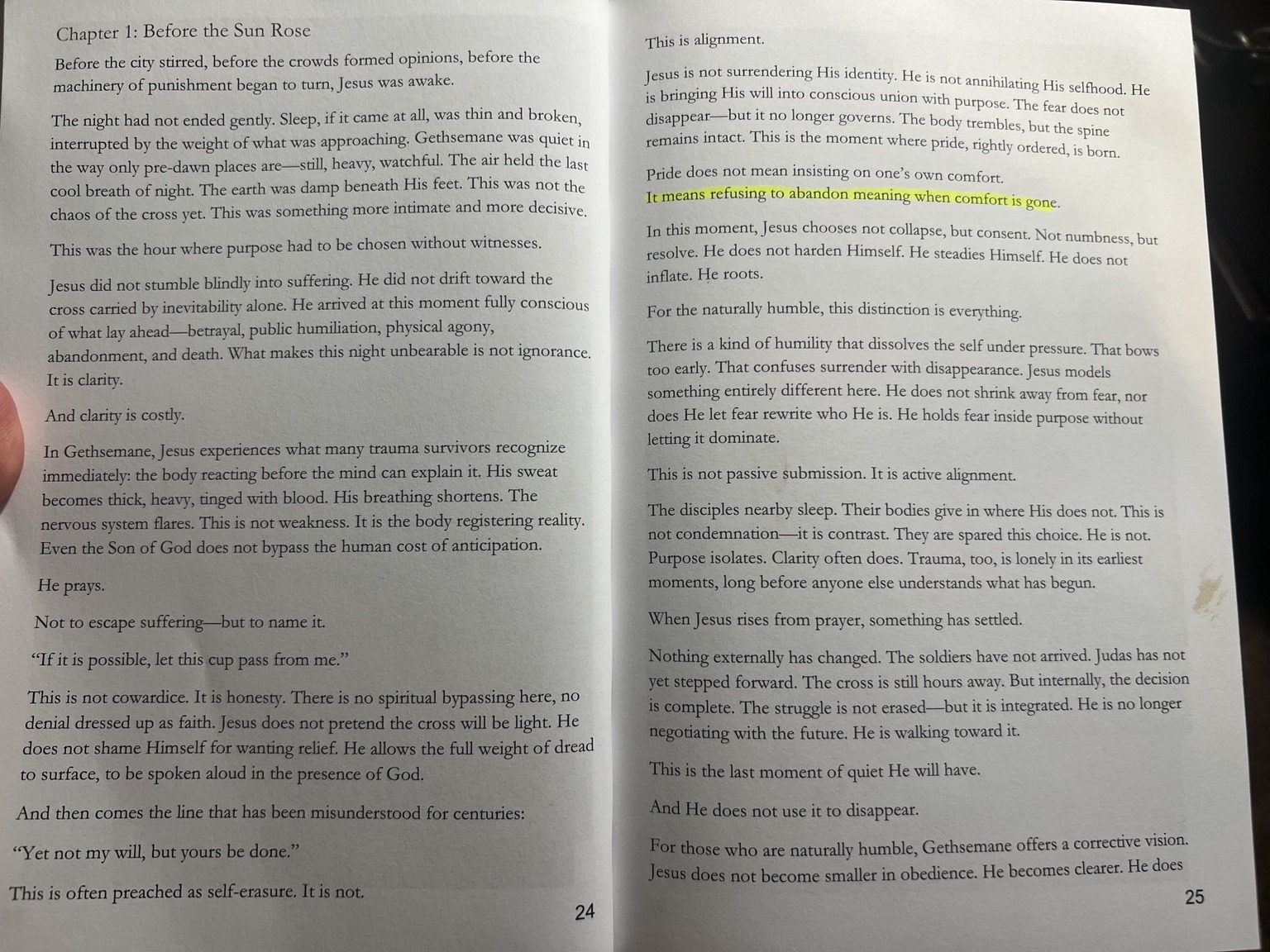
There is a kind of humility that dissolves the self under pressure. That bows too early. That confuses surrender with disappearance. Jesus models something entirely different here. He does not shrink away from fear, nor does He let fear rewrite who He is. He holds fear inside purpose without letting it dominate.